Can psychics predict the future? Many people seem to think so. Others argue that, in most cases, so-called psychic experiences are really misinterpretations of events. In this episode of NOVA, magician and confirmed skeptic James Randi challenges viewers to weigh the evidence for and against the existence of psychic phenomena.
Professor Iain Stewart examines the role of geology in the history of mankind in this documentary program. Each of the classical elements plays a role - for instance, he points out that mankind has been drawn to fault lines for centuries, since this is the best place to find minerals, oil, soil suitable for farming, etc. But with these riches comes great danger, of course, since locating communities on the fault lines makes them vulnerable to earthquakes. Subsequent episodes review the cycle of freshwater, the force of the wind, and fire both as a source of energy and a terrifying force of nature. From crystal caves in Mexico to holes in the Iranian desert and a mysterious lake in Oregon, Stewart travels the globe to hammer his point home.
1. DEEP EARTH | Beneath the Crust In this first episode, Iain explores the relationship between the deep Earth and the development of human civilisation. He visits an extraordinary crystal cave in Mexico, drops down a hole in the Iranian desert and crawls through 7,000-year-old tunnels in Israel.
His exploration reveals that throughout history, our ancestors were strangely drawn to fault lines, areas which connect the surface with the deep interior of the planet. These fault lines gave access to important resources, but also brought with them great danger.
Share the wonder of the extraordinary place we call home. Utilizing the latest technology Our Planet was filmed entirely in Ultra High Definition in over 50 countries. From exotic jungles to the deepest seas, open your eyes to the connections we all share.
1. ONE PLANET The habitats that make up our planet are connected and reliant upon each other. The astonishing diversity of life on earth depends on these global connections. Witness the planet's breathtaking diversity—from seabirds carpet-bombing the ocean to wildebeests eluding the wild dogs of the Serengeti.
2. FROZEN WORLDS Our poles are some of the earth's last remaining wildernesses. And yet just as we are beginning to understand these extraordinary places, they are changing fast. On the unforgiving frontier of global warming, polar bears, walruses, seals and penguins find their icy Edens in peril.
Master teacher Paul Hewitt teaches noncomputational Conceptual Physics. Observe Hewitt teach in a classroom with real students, using engaging demonstrations and artwork.
Years ago, I found myself serving jury duty during my unit on waves. I had the substitute show the Mechanical Universe episode on waves, and a Conceptual Physics Alive episode on waves. When I returned, I asked my students which video they preferred. To my surprise, they preferred Hewitt's videotaped classroom lecture over the slickly produced television program. That's not to take anything away from the massive accomplishment that is The Mechanical Universe. Rather, it speaks highly of Hewitt's extraordinary ability to connect to students.
Set 1: Motion 1. INTRODUCTION Author Paul Hewitt describes the perspective taken in the Conceptual Physics program and offers a preview of things to come. The program begins with a description of how the video series came to be. Enjoy the clips from the “old days” going all the way back to 1974!
2. LINEAR MOTION
In this lecture, Paul Hewitt describes the relationship between distance, speed, and time for objects moving at constant speed. He then discusses how accelerated motion is different. Lastly, he shows how to determine “how fast” and “how far” for objects in free fall.
3. VECTORS AND PROJECTILES
In this lecture, Paul Hewitt reviews uniform motion and accelerated motion. He then combines those ideas to explain the nature of projectile motion.
Take a mind-blowing journey through human history, told through six iconic inventions that modern people take for granted, and see how science, invention, and technology built on one another to change everything.
This series spotlights the history of engineering, which aligns nicely with the NGSS emphasis on engineering. While Patrick Stewart narrates, there is refreshing representation among the various presenters who appear throughout the series.
1. THE TELESCOPE Episode 1 tells the story of the development of the telescope, from a stone-age observatory to the space-based telescopes of the future.
Scholars Derrick Pitts (The Franklin Institute), Brett Salmon & Dan Coe (Space Telescope Science Institute), Fabio Silva (Bournemouth University), Shelley James (Glass Artist), Jim Al-Khalili (University of Surrey), Binh Danh (San Jose State University), and Lindsay Smith Zrull (Harvard Observatory) tell us the story of the telescope.
It entails long-abandoned Stone Age dolmens once used as celestial calendars, how Venetians made glass transparent, the optics of a medieval Persian camera obscura, a Dutch lens maker’s wartime breakthrough and a Venetian math teacher’s advancement of it, a Parisian invention improved by a spilled bottle of mercury, a team of women known as human computers who were armed with fly spankers, an athlete-turned-astronomer working high above Los Angeles, and telescope in space that will allow us to see as far as physics will allow.
Episode 1 "breakthrough celebrities" include Galileo Galilei, Edwin Hubble, Henrietta Swan Leavitt, Louis Daguerre, Hans Lippershey, and Ibn al-Haytham.
The Mechanical Universe...and Beyond is a critically-acclaimed series of 52 thirty-minute videotape programs covering the basic topics of an introductory university physics course. The series was originally produced as a broadcast telecourse by the California Institute of Technology and Intelecom, Inc. with program funding from the Annenberg/CPB Project.
Each program in the series opens and closes with Caltech Professor David Goodstein providing philosophical, historical and often humorous insight into the subject at hand while lecturing to his freshman physics class. The Mechanical Universe contains hundreds of computer animation segments, created by Dr. James F. Blinn, as the primary tool of instruction. Dynamic location footage and historical re-creations are also used to stress the fact that science is a human endeavor.
The series has been broadcast as a telecourse over the PBS television network and can still be seen on many PBS stations. The Mechanical Universe is arguably the most successful attempt to date to use video technology in the presentation of rigorous physics instruction.
National Geographic · 2016 · Presenter: Will Smith
One Strange Rock is the extraordinary story of Earth and why it is special and uniquely brimming with life among a largely unknown but harsh cosmic arena; astronauts tell the story of Earth through a unique perspective. The camera work is stunning and includes sweeping vistas, detailed close-ups, and dynamic drone footage. One Strange Rock is hosted by Will Smith and astronauts Chris Hadfield, Nicole Stott, Jeffrey Hoffman, Mae Jemison, Leland Melvin, Mike Massimino, Jerry Linenger, and Peggy Whitson.
The people involved in the story speak in their native languages. Subtitles appear, but there are no voice-overs. The authenticity is powerful.
This series examines the interplay between earth science and biology. It’s an essential for the NGSS course, The Living Earth. But it can work in other courses, too.
A "second season" of One Strange Rock appeared in 2021. It's called Welcome to Earth.
Astronaut Chris Hadfield reveals the unlikely and unexpectedly interconnected systems that allow life on our planet to breathe. Shooting locations include Ethiopia, Brazil, Norway, Peru, Thailand, and the International Space Station.
2. STORM
Ever wonder how our planet got here? It was born in a cosmic storm. The violence could have destroyed us, but instead it made us. Shooting locations include Mexico, Morocco, India, Switzerland, Quebec, Zambia, the North Atlantic, and the International Space Station.
National Geographic · 2014 · Presenter: Neil deGrasse Tyson
Cosmos: A Spacetime Odyssey, is a thirteen-part American science documentary television series released in 2014. The show is a follow-up to the 1980 television series Cosmos: A Personal Voyage, which was presented by Carl Sagan is considered a milestone for scientific documentaries. This series was developed to bring back the foundation of science to network television at the height of other scientific-based television series and films. The show is presented by astrophysicist Neil deGrasse Tyson, who, as a young high school student, was inspired by Sagan.
1. STANDING UP IN THE MILKY WAY Tyson opens the episode to reflect on the importance of Sagan's original Cosmos, and the goals of this series. He introduces the viewer to the "Ship of the Imagination", the show's narrative device to explore the universe's past, present, and future. Tyson takes the viewer to show where Earth sits in the scope of the known universe, defining the Earth's "address" within the Virgo Supercluster. Tyson explains how humanity has not always seen the universe in this manner, and describes the hardships and persecution of Renaissance Italian Giordano Bruno in challenging the prevailing geocentric model held by the Catholic Church. To show Bruno's vision of the cosmic order he uses an animated adaptation of the Flammarion engraving, a 19th century illustration that has now become a common meme for the revealing of the mysteries of the Universe.
The episode continues onto the scope of time, using the concept of the Cosmic Calendar as used in the original series to provide a metaphor for this scale. The narration describes how if the Big Bang occurred on January 1, all of humankind's recorded history would be compressed into the last few seconds of the last minute on December 31. Tyson concludes the episode by recounting how Sagan inspired him as a student as well as his other contributions to the scientific community.
In Pandemic: How to Prevent an Outbreak, we meet the heroes on the front lines of the battle against influenza and learn about their efforts to stop the next global outbreak.
1. IT HUNTS US In this introduction to life on the front lines, doctors in the U.S. and Asia battle the flu, and researchers race to develop a universal vaccine.
2. PANDEMIC IS NOW Vaccine debates rage while health-care workers inoculate against the Ebola virus in Congo and influenza in detainee camps at the U.S.—Mexico border.
3. SEEK, DON’T HIDE Worldwide, scientists test animals and their handlers for emerging viruses. In the U.S. and India, doctors work long hours caring for flu patients.
Science teachers have an obligation to instill critical thinking and skepticism in their students. If my students can calculate kinetic energy as (1/2)mv^2 but also buy a Power Balance bracelet or accept media reports of paranormal activity, I feel I have failed them.
So I insert explicit lessons in skepticism and critical thinking into the curriculum throughout the school year. My hope is that such lessons strengthen students' thinking skills I'm the classroom and (more importantly) beyond. I developed these activities for use with my own students.
Can psychics predict the future? Many people seem to think so. Others argue that, in most cases, so-called psychic experiences are really misinterpretations of events. In this episode of NOVA, magician and confirmed skeptic James Randi challenges viewers to weigh the evidence for and against the existence of psychic phenomena.
2. MERCHANTS OF DOUBT
A documentary that looks at pundits-for-hire who present themselves as scientific authorities as they speak about topics like toxic chemicals, pharmaceuticals and climate change.
Cosmos: A Personal Voyage is a thirteen-part television series that covers a wide range of scientific subjects, including the origin of life and a perspective of our place in the universe.
I turned 16 while this series aired, and was completely captivated by it. My father had been a fan of Bronowski's Ascent of Man and Burke's Connections. Those were outstanding series in their own rights. But I was all about astronomy, and Sagan's journey resonated with me.
Sagan's Cosmos aged very well and is still regarded as among the best science miniseries ever produced. And as WIRED noted, Sagan's still right all these years later.
The way I used Cosmos was as a "chill day" between units in Physics. For my students, and for me. We all needed it. I kept their question sets after each episode. At the end of the year, I'd give them their sets back and they could use them on a "Cosmos Unit Test". Easy with the completed question sets; challenging without. Definitely among my longest "delayed gratification" activities.
1. THE SHORES OF THE COSMIC OCEAN Carl Sagan opens the program with a description of the cosmos and a "Ship of the Imagination" (shaped like a dandelion seed). The ship journeys through the universe's hundred billion galaxies, the Local Group, the Andromeda Galaxy, the Milky Way, the Orion Nebula, our Solar System, and finally the planet Earth. Eratosthenes' successful calculation of the circumference of Earth leads to a description of the ancient Library of Alexandria. Finally, the "Ages of Science" are described, before pulling back to the full span of the Cosmic Calendar. Note: the revised version of the series adds an introduction by Ann Druyan to this episode, recorded after Sagan's death, in which she discusses some of the changes that occurred in the years after its broadcast.This episode emphasizes astronomy: from the universe to the round Earth.
The Physics: series is a collection of physics documentaries I found compelling enough to incorporate into my high school physics curriculum when circumstances allowed. Many were episodes of PBS's NOVA. Others came from BBC, NASA, or were produced for theatrical release.
These documentaries relate to origins of E=mc2 and consequences of atomic weapons.
The Physics: series is a collection of physics documentaries I found compelling enough to incorporate into my high school physics curriculum when circumstances allowed. Many were episodes of PBS's NOVA. Others came from BBC, NASA, or were produced for theatrical release.
These documentaries relate to electricity and magnetism.
Armed with the latest high-tech mobile radar and computer technology and large amounts of courage, the world's top scientists and meteorologists take part in some of the most dangerous work imaginable. A high-voltage trip into the most electrically charged weather in the world, culminating in a dazzling lightning show set to music. The program also visits with some of lightning's tragic victims who thought they were out of harm's way. Lightning's fleeting rivers of electricity strike Earth 6,000 times a minute; jolt every commercial airplane one or two times a year; wipe out power to entire cities, hit 1,000 people annually; and account on average for more deaths than hurricanes and tornadoes put together.
The Physics: series is a collection of physics documentaries I found compelling enough to incorporate into my high school physics curriculum when circumstances allowed. Many were episodes of PBS's NOVA. Others came from BBC, NASA, or were produced for theatrical release.
Documentary maker David Malone delves into the secrets of ocean waves. In an elegant and original film, he finds that waves are not made of water, that some waves travel sideways, and that the sound of the ocean comes not from water but from bubbles. Waves are not only beautiful but also profoundly important, and there is a surprising connection between the life cycle of waves and the life of human beings.
2. TOUR OF THE ELECTROMAGNETIC SPECTRUM This one is encyclopedic. An overview is followed by descriptions of radio, microwaves, infrared, visible, ultraviolet, x-rays, and gamma rays.
Question sets are available for individual episodes. The complete series bundle is available at a discounted price. Student documents and answer keys are provided as Google Docs on Google Drive.
The Physics: series is a collection of physics documentaries I found compelling enough to incorporate into my high school physics curriculum when circumstances allowed. Many were episodes of PBS's NOVA. Others came from BBC, NASA, or were produced for theatrical release.
This pair of documentaries tell the story of low-temperature physics research.
Our mastery of cold is something we take for granted, whether it s air conditioning and frozen food or the liquefied gases and superconductivity at the heart of cutting-edge technology. But what is cold? How do you achieve it, and how cold can it get? This two-part NOVA special brings the history of this frosty fascination to life with brilliant dramatic recreations of high moments in low-temperature research and the quest for ever-lower notches on the thermometer.
The Physics: series is a collection of physics documentaries I found compelling enough to incorporate into my high school physics curriculum when circumstances allowed. Many were episodes of PBS's NOVA. Others came from BBC, NASA, or were produced for theatrical release.
These documentaries relate to Galileo and Newton, two "founding fathers" of physics.
In this two-hour special, NOVA celebrates the story of the father of modern science and his struggle to get Church authorities to accept the truth of his astonishing discoveries. The program is based on Dava Sobel's bestselling book, Galileo's Daughter, which reveals a new side to the famously stubborn scientist—that his closest confidante was his illegitimate daughter, Sister Maria Celeste, a cloistered nun.
Web videos that involve physics are fun to watch. They can be even more engaging with the addition of a few well-crafted questions. Note: sometimes videos on YouTube "disappear". They can usually be found using search.
Add these to your mix of classroom demonstrations and lab activities to thoroughly teach each topic at hand. I developed this resource for use with my own physics students.
YouTube Physics on Teachers Pay Teachers
L E S S O N S
1. DODGE NITRO JUMP
This activity engages students with a practical problem. A motorist is trying to revive his broken-down car. A second motorist offers assistance. When a jump-start is arranged, things take an unexpected turn in the parking lot at Beachs.
Jump Start Dodge Nitro Ad (YouTube v=r1RiysqWBVI)
The Galileo and Einstein Projectile Motion sim can be used to model the motion of the launched car. When air resistance is added to the simulation, things take an unexpected turn once again.
An understanding of algebraic kinematics is required here. Certainly appropriate for AP Physics 1.
The Mechanical Universe...and Beyond is a critically-acclaimed series of 52 thirty-minute videotape programs covering the basic topics of an introductory university physics course. The series was originally produced as a broadcast telecourse by the California Institute of Technology and Intelecom, Inc. with program funding from the Annenberg/CPB Project.
Each program in the series opens and closes with Caltech Professor David Goodstein providing philosophical, historical and often humorous insight into the subject at hand while lecturing to his freshman physics class. The Mechanical Universe contains hundreds of computer animation segments, created by Dr. James F. Blinn, as the primary tool of instruction. Dynamic location footage and historical re-creations are also used to stress the fact that science is a human endeavor.
Upon completion of the broadcast telecourse, Professor Richard Olenick, Associate Project Director, received funding from the National Science Foundation to produce a seven-hour High School Adaptation suitable for high school physics students.
The series has been broadcast as a telecourse over the PBS television network and can still be seen on many PBS stations. The Mechanical Universe is arguably the most successful attempt to date to use video technology in the presentation of rigorous physics instruction.
This was my first product offered for sale on Teachers Pay Teachers: question sets for a video series produced more than 30 years ago. Videos that were no longer offered for sale and had never been uploaded for streaming. If you were not already in possession of these High School Adaptations of The Mechanical Universe, you could not get them "for love or money." Such is the mark of my business acumen.
Nevertheless they sold. I eventually uploaded the videos to my own YouTube account and awaited copyright claims. Crickets. It was as I had suspected: no one was selling physical copies, and no one was selling streaming access. So these versions join their college edition siblings as freely available resources streaming on YouTube.
I wrote these questions because I wasn't happy with the question sets provided by the publisher when my school purchased the High School Adaptation set in the early 1990s. Those required long-form answers that took students out of the moment while the episode played. I wanted to keep them engaged with the episode without needing to pause the video.
Do heavier bodies fall faster than lighter ones? The way that Galileo arrived at an answer to this question was as revolutionary as the answer itself. Although Galileo could not create a vacuum, he could imagine one, and so he realized that in a vacuum all bodies fall with the same constant acceleration. In this video, Galileo’s investigation of the law of failing bodies is presented with an emphasis on scientific methods. Galileo’s pioneering work in quantifying empirical data earned him the title of “The Father of Modern Science.”
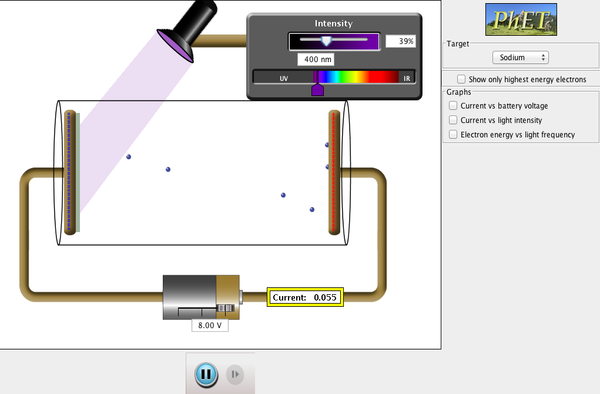
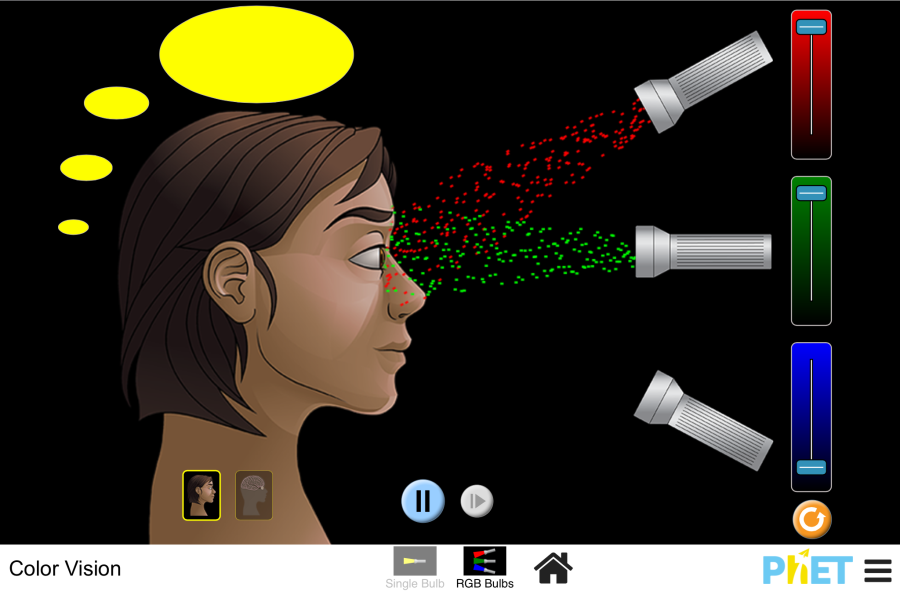
The PhET program at the University of Colorado/Boulder has been making quality simulations since the 1990s. I don't recall the exact details of when I started crafting activities around them. But I know I chose to work PhET-based activities into my Conceptual Science lab manuals because I could count on them being universally accessible, free of charge.
When PhET ported its legacy Flash and Java sims into HTML5, some characteristics of the sims changed. Some of the changes broke some of the activities I had written for the original simulations.
Here are the activities I've written for sims involving the atom and the nucleus.
Using PhET's Radioactive Dating Game sim, correctly estimate the age of the various virtual objects (skulls, rocks, etc.) using the principles of radiometric dating
The PhET program at the University of Colorado/Boulder has been making quality simulations since the 1990s. I don't recall the exact details of when I started crafting activities around them. But I know I chose to work PhET-based activities into my Conceptual Science lab manuals because I could count on them being universally accessible, free of charge.
When PhET ported its legacy Flash and Java sims into HTML5, some characteristics of the sims changed. Some of the changes broke some of the activities I had written for the original simulations.
Here are the activities I've written for sims involving light and optics.