Showing posts with label History. Show all posts

Monday, April 27, 2026

Ancient Skies


My first course in physics was my high school Project Physics corse. Project Physics was Harvard's post-Sputnik physics curriculum. The more prominent post-Sputnik physics curriculum was developed by the Physical Science Study Committee (PSSC). 

PSSC was a mathematically rigorous curriculum intended to foster a generation of scientists and engineers capable of competing with the Soviet Union's scientists and engineers. Project Physics took more of a humanities-based approach, steeped in history and personalities.

Through a bit of trickery that I shouldn't have been able to get away with, I managed to take Project Physics in 11th grade and PSSC Physics (at another campus) in 12th grade. (Physics had sunk its hooks into me early.)

I loved both courses, but preferred Project Physics. As I watched Ancient Skies, I was reminded of my fascination with the history of science that was a feature of Project Physics. And my Close Personal Friend® Phil Plait is featured throughout the series. Phil was a classmate at The University of Michigan (a proud employee of Parcheesi's Pizza while I worked at Wazoo Records), and a fellow traveler in the James Randi Educational Foundation's Amazing Meetings and the Amazing Adventure in the Galápagos.

With breath-taking CGI, beautiful landscape footage and some of the world's most important astronomical artifacts, Ancient Skies looks at the cosmos through the eyes of our ancestors, and our changing views of the cosmos throughout history.

Monday, January 12, 2026

The American Revolution


In 1990, Ken Burns made a name for himself with his series, The Civil War. Since then, he has created many celebrated historical documentaries. In 2025, he (and his team) released The American Revolution.

I appreciate that the Civil War gets more attention than the Revolutionary War. But the Revolutionary War seemed a bit too marginalized in my own recollection of US History coursework. And too simplistic in my memory. So I was grateful to see this 12-hour documentation produced by Team Burns.

So of course, I have questions. As each episode runs well over 100 minutes, I have about 100 questions for each episode. This might seem like a heavy load for students watching each episode, but it is not. 

Each question requires a response that takes very few seconds to complete. Students can relax and listen for most of the screening time, but the questions will help maintain their focus. Most quickly become adept at pre-reading the next question up, and are ready to pounce when the answer comes up.

Thirteen American colonies unite in rebellion, win an eight-year war to secure their independence, and establish a new form of government that would inspire democratic movements at home and around the globe. What begins as a political clash between colonists and the British government grows into a bloody struggle that will engage more than two dozen nations and forever change the world.

Friday, October 17, 2025

Human


It seems that each season, NOVA airs an in-depth series co-produced (created by?) the BBC. For Season 52, it's the five-part series, Human.

Around 300,000 years ago, Homo sapiens emerged in Africa—one of at least seven human species alive at the time. Now, we are the only remaining human line, and our impact on the planet is undeniable. In this stunningly cinematic five-part series, paleoanthropologist Ella Al-Shamahi traces the surprising story of human origins. Remarkable new fossil evidence, modern DNA sequencing, and other cutting-edge scientific tools are shedding new light on the lives and journeys of long-vanished human species, and how our encounters with them helped make us who we are today.

Sunday, January 5, 2025

Lost Tombs of Notre Dame


The world looked on in horror as Notre Dame Cathedral burned in the middle of Paris in April, 2019. Restoring the cathedral has spawned two episodes of NOVA. Rebuilding Notre Dame in 2022, and now Lost Tombs of Notre Dame.

The restoration project has been a massive undertaking. This episode is devoted to some of the things found under the stone flooring, and the forensic work devoted to solving these uncovered mysteries. 

After the devastating 2019 fire at Notre Dame, two mysterious sarcophaguses were discovered under the cathedral’s stone floor. Who is buried in them, and what secrets will these coffins reveal? Follow a team of archaeologists and historians as they attempt to solve centuries-old mysteries using the latest scientific investigation techniques. What can forensic analysis of the remains reveal about one of the world’s most famous cathedrals and those who devoted their lives to it?

Sunday, December 22, 2024

Rebuilding Notre Dame

The world watched in horror as Notre Dame Cathedral burned in the middle of Paris in April, 2019. France immediately embarked on the massive undertaking of restoring the cathedral. And they were intent on restoring the cathedral as it was before the fire. This made things even more challenging.

[It's always nice when I can use a photo from my own archives for the cover art. My polarizer was working hard on that shot.]

Following the April, 2019 fire that almost destroyed Paris’s iconic Notre Dame Cathedral, a team of engineers, masons, and timber workers set out on the daunting challenge of restoring France’s historic landmark. The program traces the dramatic human and technical challenges of the project’s first three years, going behind-the-scenes with carpenters shaping lumber for the new roof and spire, stone masons repairing gaping holes in the vault, and artisans who use traditional techniques to restore stained glass windows. A symbol of the nation’s identity and resilience, Notre Dame gradually rises from the ashes, thanks to a restoration project like no other.

Monday, December 2, 2024

Leonardo Da Vinci

 
American documentary film-making legend Ken Burns has expanded his horizons. In his first off-shore foray, he examines the life and times of Leonardo Da Vinci. 

There is much to explore. And I have questions.

A 15th century polymath of soaring imagination and profound intellect, Leonardo da Vinci created some of the most revered works of art of all time, but his artistic endeavors often seemed peripheral to his pursuits in science and engineering. Through his paintings and thousands of pages of drawings and writings, Leonardo da Vinci explores one of humankind’s most curious and innovative minds.
Leonardo da Vinci grows up in a Tuscan village surrounded by nature, then moves to Florence, where the Renaissance is in full bloom, to apprentice as an artist and craftsman. He shows extraordinary talent but at times struggles to finish commissions. Later, in Milan, he joins Duke Sforza’s court, begins writing treatises, and paints a monumental fresco depicting the Last Supper.

Leonardo works as a military engineer, designs fanciful flying machines, studies light and shadow, investigates gravity, dissects cadavers, and pens treatises on a vast array of subjects, all while seeking the perfect patron. In Florence, Milan, Rome and finally France, he pours the sum of his scientific and artistic knowledge into a portrait that would become the most famous painting on earth.

Thursday, November 28, 2024

Benjamin Franklin


As a frequent visitor to pbs.org, I was seeing promotional material for the (then) upcoming Ken Burns' Leonardo Da Vinci documentary. While poking around, I discovered that he made a two-parter covering Benjamin Franklin. So I crafted a question set for that while waiting for the Da Vinci work to air.

Each episode runs about two hours, so this is a considerable piece of work. Each episode is divided into chapters; see product listings for complete details.

Leaving behind his Boston childhood, Benjamin Franklin reinvents himself in Philadelphia where he builds a printing empire and a new life with his wife, Deborah. Turning to science, Franklin's lightning rod and experiments in electricity earn him worldwide fame. After entering politics, he spends years in London trying to keep Britain and America together as his own family starts to come apart.

Benjamin Franklin leaves London and returns to wartime Philadelphia where he joins Congress and helps Thomas Jefferson craft the Declaration of Independence. In Paris, he wins French support for the American Revolution then negotiates a peace treaty with Britain. He spends his last years in the new United States, working on the Constitution and unsuccessfully promoting the abolition of slavery.

Both episodes, bundled and discounted.

Monday, August 21, 2023

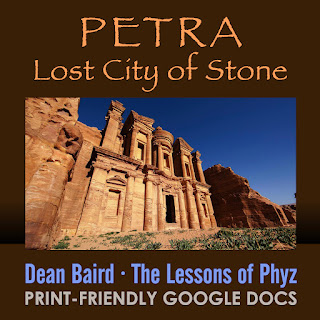
Petra: Lost City of Stone

You might remember Petra from its scenes in Indiana Jones and the Last Crusade. Over the years I've seen pictures from time to time, but I never really knew the story. This episode of NOVA cured that. And it elevated my awareness of the non-gold gifts said to have been presented to Jesus upon the occasion of his birth. The once-nomadic Nabataeans became "the richest race on Earth" by trafficking in frankincense and myrrh while building this oasis deep in the desert of what is now Jordan. How they managed such enormous carvings and bringing water to the city of stone are the subjects of this episode.

Thursday, August 17, 2023

Hagia Sophia: Istanbul's Ancient Mystery

Hagia Sophia is a Byzantine church that has survived a few tests of time across its 1500 years. It was a marvel of architecture when it opened in 537 CE in Constantinople, it now stands as a monument of resilience in Istanbul in a region subject to cultural change and seismic activity. Built in six years with no apparent budget restrictions, its novel innovations appear to make it a likely survivor of future earthquakes. Originally a Byzantine Christian church, it was repurposed as a Catholic church, then an Islamic mosque, and then a secular museum. Since this episode of NOVA was produced, it was once again repurposed as an Islamic mosque.

Saturday, June 10, 2023

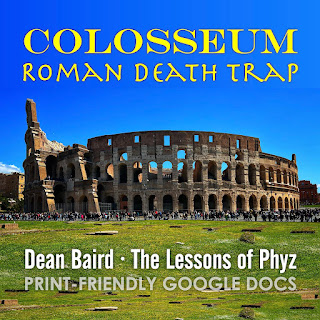
Colosseum: Roman Death Trap

Among the most hackneyed of tweet opening phrases is "I don't know who needs to hear this, but...". The author is attempting to signal an imminent dose of universal wisdom.

This episode of NOVA popped up as this week's summer rerun for NOVA. I visited the Colosseum in April and saw a lift made of lumber in the bowels (hypogeum) of the structure. This program tells its story, and much, much more. As the title implies, it was not a place of joy, mirth, or happiness for those who participated in the spectacles. 

But there was state-of-the-art engineering going on in there. So ... I don't know who needs to use this, but there is cromulent STEM content in this episode: mechanical and hydraulic engineering as well as emission spectroscopy and bone-strengthening nutritional supplements for gladiators. Gladiators were trained in fight schools and were provided with health care. Not all gladiator fights were allowed to end in a death (given the investments in these fighters). But releasing wild apex predators into the arena via lifts and trap doors kept audiences coming back for more.