Showing posts with label Chemistry. Show all posts

Tuesday, August 5, 2025

Chemistry Crossword Puzzles [Essential Chemistry-aligned]

These crossword puzzles are intended for first-course students. Topical terms constitute the core of the word list. They come from PASCO Scientific’s
Essential Chemistry textbook. Additional terms (to fill in the grid space) lean toward science, but sometimes wander into simple mathematics, general knowledge, technology, pop culture, geography, initialisms and acronyms, Roman numerals, or randomness.

Although this kind of activity may seem too simple for high school science, I discovered that it is not. I wrote a post detailing my surprising findings: Crosswords that work in college-prep courses.

I created these puzzles for use in high school courses. Because I was using crossword creator software, I chose to build as robust a crossword as possible. The more crosses, the better. The fewer blank spaces on the grid, the better. The chemistry topic vocabulary served as the core of the word list. I added “fair-game” terms to fill the gaps. While competing crosswords might have 20-30 words with a few dozen crosses, each of these has over 100 words with over 150 word crosses.

essential CHEMISTRY Crossword Puzzles 

Wednesday, May 28, 2025

Monday, July 22, 2024

Crosswords that work in college prep courses

Crossword puzzles are amusements appropriate for elementary school students. Middle school at tops. They sit at the base of Bloom's taxonomy, and have no place in a rigorous high school college prep course,

Or so I thought.

I don't even remember what my impetus was for creating a series of crossword puzzles for my college prep physic course, but create I did. Computer software meant I could load a list of words and the computer would craft a puzzle grid. Then I could add words to flesh out the puzzle and fill the page.

What I didn't expect was student enthusiasm for the puzzles. That enthusiasm acted as a catalyst, and I worked out an implementation scheme.

Thursday, December 14, 2023

The Lessons of Phyz Advantages - Crosswords

CROSSWORD PUZZLES EDITION · [video question sets edition here]

Crossword puzzles in an academic core or AP lab class? Yes!
Crossword puzzles are a simple exercise in matching clues to words. Except the word, itself, is not given. The number of letters is given. And as the grid is filled in, letters of the words become apparent. By the time students ere sitting in the high school science class, they know how to work crossword puzzles without any instruction.

Does the puzzle engage students in the highest reaches of Bloom's taxonomy? No. But that's okay. Lower level retrieval has a place in the curriculum, too. And sometimes, spelling could benefit from this kind of reenforcement. In any case, students are involved in academic vocabulary.

My AP students would tear into crossword puzzles with no promise of a reward. They couldn't resist the challenge. Among grade-level Physics students, the ones who seemed most engaged in the crossword puzzles tended to be the students who were otherwise least engaged in the course as a whole. Compared to challenging conceptual questions or mathematical problems, knocking out answers on the crossword seemed much more manageable. 

And then there were the words that were not on the chapter's vocabulary list. For my original Physics crossword series, I leaned into a list of "100 Words Every High School Graduate Should Know" I found on the Internet. My English-teaching colleagues always appreciated this. Some even offered a few terms that weren't on the Internet's list.

For subsequent series (AP Physics, Chemistry, etc.), I loosened up a bit. Taylor Swift references? K-pop? Star Wars? Why not? Each puzzle's description on TPT includes the complete word list. There you can see that I did work Metallica, Megadeth, and Judas Priest into the chemistry crossword about metals. Because of course I did. Meco snuck into that puzzle, too. But that's a story of other galactic funk.

Filling the grid in The Age of Search
I use a crossword creator program (Puzzle Maker for Mac by Hokua Software LLC) to produce a puzzle grid that includes all (or virtually all) the core terms I'm hoping to get into a puzzle. The program builds several grids and allows me to choose. Computers are good at constructing a grid with lots of crossed words. Still though, it spends a few minutes concocting the options. That initial puzzle, with about 50 terms on a 28 x 28 grid, has too much empty space for my liking.

I'm no Will Shortz. (There's only one Will Shortz and he's a national treasure.) But I do feel a compulsion to fill in that grid with additional words. With an initial puzzle already built, the words I add have to fit specific places on the grid. Second letter E and fifth letter L, and so on.

There are web pages designed to find words that match the criteria. Sometimes the criteria are too tough: no matches. Sometimes they're too easy: 672 matches. This is the process that consumes the bulk of the puzzle-building time.

I usually begin scoping out the puzzle to see if I can add planet names. Or terms from previous chapters. Or math. When the going gets tough (near the end) and only two-letter "words" will do, state abbreviations and chemical symbols come in handy. As do Roman numerals, to be honest.

Sometimes a three-letter term is needed to bridge a gap. Government agencies are useful there. And some of the word-clue combos are essentially giveaways: three-letter term for Universal Serial Bus. Is it still instructive? Not everybody knows what USB or URL stands for. So there's that. Initialism are handy. Acronyms are nice, too: SCUBA and LASER come to mind. (Not everybody knows initialisms and acronyms are different things.)

In the end, I usually and up with a puzzle that has more than a hundred words that cross in over 150 places. Compare that to all the other puzzles you see for use in the classroom. Honestly: any of them! They might have two dozen words that cross in three dozen places. But they'll nearly always have enough open space to grow crops in. That was understandable in the 1970s. But now we have computers and the Internet. Machines are great at coming up with busy grids and words that will fill the spaces.

Would AI come up with a better puzzle? Maybe. I'm sure it could fill more of the 28 x 28 grid than I do. But would the words be appropriate for high school science students? Would those gap-filler words be matched to the intended audience? I haven't tried any AI crossword puzzle generators.

I design puzzles that take time to solve completely. Collaboration may be helpful. The Internet knows the answer to each individual clue (I think). But it's going to take a while, no matter how you solve it.

Fun use case: give a puzzle to students with no Internet access and see how it goes. Let them collaborate. I'm confident that a room full of high school science students could solve any of my puzzles. Eventually.

More standard use case: give the next unit's puzzle to students as they turn in unit tests with time to spare. My unit tests tended to be short enough that average students would have time left in the hour. They had to work quietly on something. My crosswords were a nice way to spend this minutes. And even though they weren't yet familiar with the next unit's academic vocabulary, half the terms in the crossword were terms they might already know. And the exercise gave them a preview of the new words to be learned soon.

Print or Online: Whatever Works for You
I used crossword puzzles in class in The Before Times, so I printed and photocopied them. When lockdowns hit, the importance of online options became apparent. The Before Times aren't coming back, so my crossword puzzles are printable and uploadable for use online. To implement the online option, you need to upload the HTML folder to your server space, then share the resulting web address (URL) with students. I uploaded a few to my own server space so you can see how they play online. They work well on laptops and tablets; not so well on phones.

Word List And Partially Solved Options
Each puzzle includes a Word List text file and PDF that can be printed and photocopied or shared electronically. Additionally, I included PDFs of "partially solved" puzzles. Grade-level puzzles include student documents with 10% and 20% of the letters filled in in advance. For AP Physics, the pre-solves are 5% and 10%.

Me? I didn't give students the word list or partially solved puzzles. But the options are there for you. Your students; your call!

Monday, December 11, 2023

Chemistry Crossword Puzzles [OpenStax-aligned]

I finished sets of crossword puzzles for Physics and AP Physics (1 & 2). But creating crossword puzzles is so much much fun, I wandered the Internet over to OpenStax and found their Chemistry textbook. The first chapter had an end-of-chapter vocabulary list. So away I went. This post will be updated as new chemistry crosswords are added to the collection.

The Lessons of Phyz crossword advantage? At least 100 words that cross at least 150 times. Not those mostly empty grids with a handful of words and two dozen crosses. I'm no Will Shortz, but I am putting in some effort. And while the majority of the terms are chemistry, science, and math-related, the occasional Taylor Swift, Disney, or other pop culture references work to engage students that might be otherwise less engaged in the course. My own students used to gobble up crossword puzzles even without any promise of reward. Conquering the grid was all the incentive they needed.

Word Count: 103 · Puzzle Score (word crosses): 158

Core terms:Accuracy, Atom, Celsius, Centimeter, Change, Chemical, Chemistry, Compound, Conservation, Conversion, Cubic, Density, Element, Exact, Extensive, Fahrenheit, Gas, Heterogeneous, Homogeneous, Hypothesis, Intensive, Kelvin, Kilogram, Law, Length, Liquid, Liter, Macroscopic, Mass, Matter, Meter, Microscopic, Milliliter, Mixture, Molecule, Physical, Plasma, Precision, Property, Pure, Rounding, Second, SI, Significant, Solid, Temperature, Theory, Uncertainty, Unit, Volume, Weight

Selected additional terms: Acute, Amber, Andromeda, cc, Cone, cos, Divide, Echo, Etna, GMO, Gram, HIV, Hue, Inch, Neptune, Odor, Parallel, Perpendicular, sin, Sodium, Spine, TNT, Venus


Words: 103 · Puzzle Score: 159

Thursday, April 6, 2023

Big Links Pages

Really just an excuse for me to post a favorite shot from Brooks Falls, Katmai, Alaska a few years ago. Arctic Lynx.

In any case, I always found some utility in big pages of links for video series. Links to videos (where possible) and question sets. So I made some for video series in various content areas. Here's what I've got.


A Personal Voyage [Carl Sagan 1980: 13 episodes]
A Spacetime Odyssey [Neil deGrasse Tyson 2014: 13 episodes]
Possible Worlds [Neil deGrasse Tyson 2020: 13 episodes]

Chemistry: A Volatile History [Jim Al-Khalili: 3 episodes]
Hunting the Elements ... Beyond the Elements [David Pogue]
Chemistry: Challenges and Solutions [13 episodes]
The World of Chemistry [Roald Hoffmann: 26 episodes]

How Earth Made Us | How the Earth Changed History [Iain Stewart: 5 episodes]
Earth Revealed: Introductory Geology [26 episodes]
The Habitable Planet: A Systems Approach to Environmental Science [13 episodes]

I'll keep these lynx links over in the bar on the right.

Saturday, April 1, 2023

The Big Page of Chemistry

When The Mechanical Universe series was posted to YouTube, I constructed an HTML page to index the episodes. Then I added the High School Adaptations and links to my TPT question sets. Now I've got a comprehensive The Mechanical Universe of Phyz web page that I found to be quite useful.

Now that I've created question sets for four series concerning Chemistry, I thought a Big Page of Chemistry might be in order.

Here's the link to the page: Chemistry

The series indexed (from fewest to most episodes) are

Chemistry: A Volatile History (with Jim Al-Khalili)
This BBC mini-series has been my best-selling chemistry series.

Hunting the Elements and Beyond the Elements (with David Pogue)
David Pogue is always kinetic and entertaining. Hunting is a two-hour special; Beyond was the decade-later mini-series sequel.

Chemistry: Challenges and Solutions (with a variety of host researchers)
Thirteen half-hour episodes cover many major topics in chemistry. And demonstrations are woven in nicely.

The World of Chemistry (with Roald Hoffmann)
Twenty-six half-hour episodes provide comprehensive coverage of chemistry topics. First aired in 1990, and the years have not been kind to it. The Mechanical Universe has aged much more gracefully. But the academic content is solid. Series demonstrator, Don Showalter, is always great fun.

Thursday, March 16, 2023

The World of Chemistry

Produced after The Mechanical Universe and before Earth Revealed, The World of Chemistry with Roald Hoffmann debuted on PBS in 1990. Chemistry Nobel laureate, Roald Hoffmann hosts and Don Showalter is the series demonstrator in this series consisting of 26 half-hour episodes.

I've bundled the question sets into four series. A megabundle combines all the series is available, as are each of the individual episodes.

This series is not as polished or timeless as The Mechanical Universe, nor has it aged as well. But you might find some gems here that fit nicely into a well-balanced Chemistry, AP Chemistry, or Chemistry of the Earth Systems curriculum. And at 26 episodes, it's fairly comprehensive.

And for something with more contemporary sensibilities, check out Chemistry: Challenges and Solutions.


Wednesday, December 28, 2022

Chemistry: Challenges and Solutions

A video-based instructional series in chemistry with accompanying website for high school and college classes. 13 half-hour programs, online text, course guide, interactive lessons, historical timeline and periodic table.

Chemistry: Challenges and Solutions teaches general chemistry concepts using real-life challenges in energy, materials development, biochemistry, and the environment.

The course zeroes in on essential topics that are generally taught in introductory chemistry, providing a strong foundation for learners to pursue further study in science or a liberal-arts education. Videos include dramatic demonstrations of key principles, interviews with scientists who are doing current research related to these fields, animations, and clear explanations. Each video is hosted by a different working chemist – together, they show a diversity of chemistry professionals and the challenges chemistry is addressing for society. The on-line text covers key concepts with clear text and illustrations, while interactive labs provide simulations of chemical processes online.

Series produced in 2014 by the Harvard Smithsonian Center for Astrophysics. As of the time of publication, episodes stream at the Annenberg Learner website.


Thursday, September 8, 2022

Chemistry: we've got it

When I retired from classroom teaching in 2021, one project I set out upon was increasing the chemistry content on The Lessons of Phyz at Teachers Pay Teachers.

Physics teachers were fortunate enough to have David Goodstein's The Mechanical Universe (College and High School) at their disposal, to be used at their discretion. Better yet, they had Paul Hewitt's Conceptual Physics Alive!. All of these were in-depth, course-long series that covered nearly all the topics in introductory physics.

Surely there must be similarly comprehensive series in chemistry. 

Or not. Somehow the Goodsteins and Hewitts of chemistry either don't exist or have not had such good fortune in getting any comprehensive series green-lit. Talk to me, my colleagues in chemistry: what went wrong? If there's something missing from the list that follows, let me know.

What we do have is a couple of chemistry mini-series and one-offs that are delightful and work well in the chemistry curriculum. Here's what I've found so far.


Friday, June 10, 2022

Secrets of Size: Atoms to Supergalaxies

What would the universe look like if you were a billion times smaller or a billion times bigger? In this mind-bending series, Jim Al-Khalili will look at the universe across its vast range of size, ranging from the tiniest objects measuring just a few atoms, to vast structures consisting of hundreds of thousands of interconnected galaxies. Investigating these astonishing objects will reveal fundamental truths about our universe. At the end of each film, the audience will see the largest structures ever discovered in the universe and the smallest objects whose images scientists have managed to capture to date.

This series premiered on BBC Four in May, 2022. These question sets only have value if you can find and show the episodes. Until this miniseries makes it to, say, Amazon Prime via Spark or some such, you may need to be resourceful to access it. If you intend to assign it outside of class, make sure students will be able to access it.

Sunday, December 5, 2021

Atom

BBC · 2007 · Presenter: Jim Al-Khalili

The story of the discovery that everything is made from atoms, one of the greatest scientific breakthroughs in history, and the brilliant minds behind it.

Atom on Teachers Pay Teachers

E P I S O D E S

1. CLASH OF TITANS 
The modern understanding of the atom unfolded in the early years of the twentieth century. Baffling discoveries made by ingenious experimental scientists challenged the foremost theoretical physicists of the era. Rival factions fought over competing models. The players were human, with human strengths and weaknesses. Hard-fought victories were matched by crushing defeats. At the end of it all, a contemporary model of the atom emerged. Heads up: the expletive abbreviated “BS” is uttered in this episode.

Featured scientists: Ludwig Boltzmann, Albert Einstein, Ernest Rutherford, Niels Bohr, Erwin Schrödinger, Werner Heisenberg, and Max Born.

Sunday, November 14, 2021

Beyond the Elements

PBS NOVA · 2020 · Presenter: David Pogue

Picking up where he left off in NOVA's popular special, Hunting the Elements, David Pogue sets out on a worldwide quest to find the key molecules and chemical reactions that have paved the way for human civilization, life, and even the universe as we know it. And along the way, he uncovers the simple principles that produce such a dizzying diversity of matter from elements on the periodic table.

Beyond the Elements on Teachers Pay Teachers

E P I S O D E S

1. REACTIONS
Just about every solid, liquid, or gas in the world as we know it begins with reactions between individual atoms and molecules. Host David Pogue dives into the transformative world of chemical reactions, from the complex formula that produces cement to the single reaction that’s allowed farmers to feed a global population by the billions—a reaction that when reversed, unleashes the powerful chemistry of high explosives.

Featuring Eric Buchanan, Edward Cussler, Joseph Franek, John Goetz, Juliette Gorson, Theodore Gray, John Hayes, Mandë Holford, Cory Marquart, and Tom Pleva.

Sunday, September 12, 2021

Hunting the Elements

PBS NOVA · 2011 · Presenter: David Pogue

HUNTING THE ELEMENTS

Where do nature's building blocks, called the elements, come from? They're the hidden ingredients of everything in our world, from the carbon in our bodies to the metals in our smartphones. To unlock their secrets, David Pogue, technology columnist and lively host of NOVA's popular "Making Stuff" series, spins viewers through the world of weird, extreme chemistry: the strongest acids, the deadliest poisons, the universe's most abundant elements, and the rarest of the rare—substances cooked up in atom smashers that flicker into existence for only fractions of a second.

Hunting the Elements on Teachers Pay Teachers

Student document and answer key are provided as a Google Docs on Google Drive.

Sunday, July 11, 2021

Chemistry: A Volatile History

BBC · 2010 · Presenter: Jim Al-Khalili


Series in which Jim Al-Khalili traces the story of how the elements, the building blocks that make up our entire world, were discovered and mapped.


E P I S O D E S

1. THE DISCOVERY OF THE ELEMENTS
The story of how the elements were discovered and mapped begins with the alchemists who questioned that the world was made up of earth, air, fire and water.

2. THE ORDER OF THE ELEMENTS 
Professor Jim Al-Khalili looks at how the early scientists' bid to decode the order of the elements was driven by false starts and bitter disputes.

Friday, January 1, 2010

Conceptual Integrated Science Explorations

Following the success of 2007's Conceptual Integrated Science for the college textbook market, Conceptual Integrated Science Explorations was produced for the school (7-12) market. It was published in 2010.

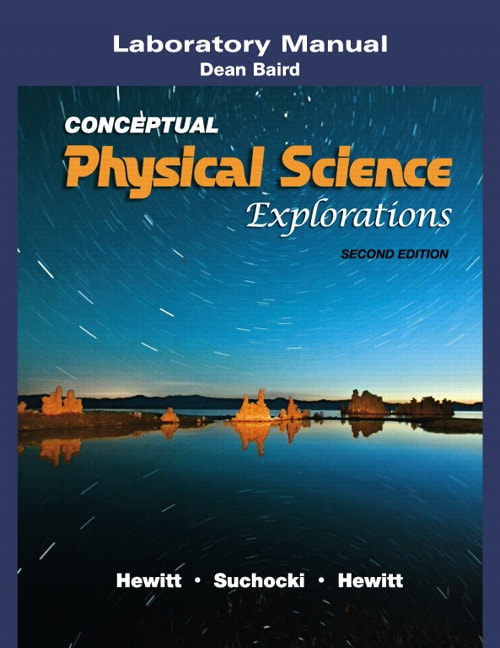
This title mirrored Conceptual Physical Science Explorations for the school market. The content once again added biology to physics, chemistry, and earth science.

Most of my work was to align the lab manual to the textbook in terms of the sequencing.

In 2017, Pearson sold its K-12 division but maintains its Higher Ed division.


Monday, January 1, 2007

Conceptual Integrated Science


Suzanne Lyons had a vision of expanding Conceptual Physical Science to include biology: Conceptual Integrated Science.

On Hewitt's Conceptual Science team, I was the lab manual author, so I was asked to handle the lab manual for this title.

But I was a mere high school physics teacher with a full-time job teaching physics. I had more than enough physics lab ideas, but I was already using John Suchocki's chemistry labs and Leslie Abrams' earth science labs in the Conceptual Physical Science titles. Biology labs? Not a chance. I was in over my head.

Suzanne contributed great earth science labs, and we outsourced biology labs from Anne Coleman. My contribution was formatting them and giving them the kind of whimsical titles so they matched the style of the manual.

I probably should have been credited as the lab manual wrangler. But in the wild world of publishing, that made me author of record.

The second edition lab manual ran into production difficulties and was a bit delayed, but it eventually saw the light of day. Of all the lab manuals I produced, this is the one best aligned to its corresponding textbook. I'm proud of that. It also seems to have lost its place in the Pearson catalogue. The 3rd edition of the Conceptual Integrated Science textbook has since been published without a lab manual.


Thursday, January 1, 2004

Conceptual Physical Science

As soon as Conceptual Physical Science Explorations was published, it was time to get to work on the 3rd edition of the college Conceptual Physical Science.

I could now use the CPSE lab manual as a foundation and bring more of my own labs into the project. The insanity of the tight CPSE timeline was no more. I was getting better at MS Word: learning how to work around its quirks and learning how to create diagrams with its art tools. The 3rd edition (my 1st edition on the team) was published in 2004.

The Conceptual Physical Science textbook did very well in the marketplace. Fourth and 5th editions followed in 2008 and 2012.

Hewitt became a regular at NSTA conferences in this era, and I joined him every chance I got. Pearson would typically schedule a session for him to promote the school (Explorations) Conceptual Science textbooks. Hewitt had me describe the nature of the lab manual within his session. I brought photos, and I brought demonstrations. The conferences were always a good chance to hang out with the Hewitts and catch up with friends at Arbor Scientific, Pasco, and PhET. I actually worked the PhET booth for several hours when NSTA came to San Francisco.

Wednesday, January 1, 2003

Conceptual Physical Science Explorations

How I Met Paul Hewitt
I attended my first Northern California and Nevada Section of the American Association of Physics Teachers meeting in the autumn of 1986 at American River College in Sacramento. Among the instructors doing Show & Tell that morning was Conceptual Physics author, Paul Hewitt.

There aren't many celebrities in the world of physics teachers, but Paul Hewitt was one. His Conceptual Physics textbook had been growing in popularity at colleges since 1971, and the then-new Conceptual Physics: A High School Program was in the process of shaking up the high school physics textbook market.

But there was Hewitt, just another person in the queue to present a demonstration to the NorCal family of physics instructors. I did my best to play it cool.

In 1989, the AAPT's Summer Meeting was in San Luis Obispo. This was my first national meeting. One day at lunch, I found myself across the table from Hewitt and we chatted it up, but I gave him no reason to remember me.