My high school physics and science curriculum at TPT, Pearson Education, Arbor Scientific, and PhET
Sunday, June 14, 2020
One Strange Rock
Monday, April 13, 2020
Cosmos: A Spacetime Odyssey
National Geographic · 2014 · Presenter: Neil deGrasse Tyson
Cosmos: A Spacetime Odyssey, is a thirteen-part American science documentary television series released in 2014. The show is a follow-up to the 1980 television series Cosmos: A Personal Voyage, which was presented by Carl Sagan is considered a milestone for scientific documentaries. This series was developed to bring back the foundation of science to network television at the height of other scientific-based television series and films. The show is presented by astrophysicist Neil deGrasse Tyson, who, as a young high school student, was inspired by Sagan.
Cosmos: A Spacetime Odyssey on Teachers Pay Teachers
E P I S O D E STyson opens the episode to reflect on the importance of Sagan's original Cosmos, and the goals of this series. He introduces the viewer to the "Ship of the Imagination", the show's narrative device to explore the universe's past, present, and future. Tyson takes the viewer to show where Earth sits in the scope of the known universe, defining the Earth's "address" within the Virgo Supercluster. Tyson explains how humanity has not always seen the universe in this manner, and describes the hardships and persecution of Renaissance Italian Giordano Bruno in challenging the prevailing geocentric model held by the Catholic Church. To show Bruno's vision of the cosmic order he uses an animated adaptation of the Flammarion engraving, a 19th century illustration that has now become a common meme for the revealing of the mysteries of the Universe.
The episode continues onto the scope of time, using the concept of the Cosmic Calendar as used in the original series to provide a metaphor for this scale. The narration describes how if the Big Bang occurred on January 1, all of humankind's recorded history would be compressed into the last few seconds of the last minute on December 31. Tyson concludes the episode by recounting how Sagan inspired him as a student as well as his other contributions to the scientific community.
Sunday, February 23, 2020
Pandemic: How to Prevent an Outbreak
Netflix · 2020
In Pandemic: How to Prevent an Outbreak, we meet the heroes on the front lines of the battle against influenza and learn about their efforts to stop the next global outbreak.
Pandemic: How to Prevent an Outbreak on Teachers Pay Teachers
E P I S O D E SIn this introduction to life on the front lines, doctors in the U.S. and Asia battle the flu, and researchers race to develop a universal vaccine.
Vaccine debates rage while health-care workers inoculate against the Ebola virus in Congo and influenza in detainee camps at the U.S.—Mexico border.
Worldwide, scientists test animals and their handlers for emerging viruses. In the U.S. and India, doctors work long hours caring for flu patients.
Sunday, September 1, 2019
Skepticism
Sunday, August 11, 2019
Cosmos: A Personal Voyage
PBS · 1980 · Presenter: Carl Sagan
Cosmos: A Personal Voyage is a thirteen-part television series that covers a wide range of scientific subjects, including the origin of life and a perspective of our place in the universe.
I turned 16 while this series aired, and was completely captivated by it. My father had been a fan of Bronowski's Ascent of Man and Burke's Connections. Those were outstanding series in their own rights. But I was all about astronomy, and Sagan's journey resonated with me.
Sagan's Cosmos aged very well and is still regarded as among the best science miniseries ever produced. And as WIRED noted, Sagan's still right all these years later.
The way I used Cosmos was as a "chill day" between units in Physics. For my students, and for me. We all needed it. I kept their question sets after each episode. At the end of the year, I'd give them their sets back and they could use them on a "Cosmos Unit Test". Easy with the completed question sets; challenging without. Definitely among my longest "delayed gratification" activities.
Cosmos: A Personal Voyage on Teachers Pay Teachers
E P I S O D E SCarl Sagan opens the program with a description of the cosmos and a "Ship of the Imagination" (shaped like a dandelion seed). The ship journeys through the universe's hundred billion galaxies, the Local Group, the Andromeda Galaxy, the Milky Way, the Orion Nebula, our Solar System, and finally the planet Earth. Eratosthenes' successful calculation of the circumference of Earth leads to a description of the ancient Library of Alexandria. Finally, the "Ages of Science" are described, before pulling back to the full span of the Cosmic Calendar. Note: the revised version of the series adds an introduction by Ann Druyan to this episode, recorded after Sagan's death, in which she discusses some of the changes that occurred in the years after its broadcast.This episode emphasizes astronomy: from the universe to the round Earth.
Sunday, March 31, 2019
Physics: Modern Physics
Sunday, March 24, 2019
Physics: Electricity and Magnetism
P R O G R A M S
Sunday, March 17, 2019
Physics: Waves and Light
P R O G R A M S
This one is encyclopedic. An overview is followed by descriptions of radio, microwaves, infrared, visible, ultraviolet, x-rays, and gamma rays.
Sunday, March 10, 2019
Physics: Heat and Temperature
Sunday, March 3, 2019
Physics: Mechanics
Monday, January 14, 2019
YouTube Physics
Sunday, September 2, 2018
The Mechanical Universe: High School Adaptations
Thursday, October 1, 2015
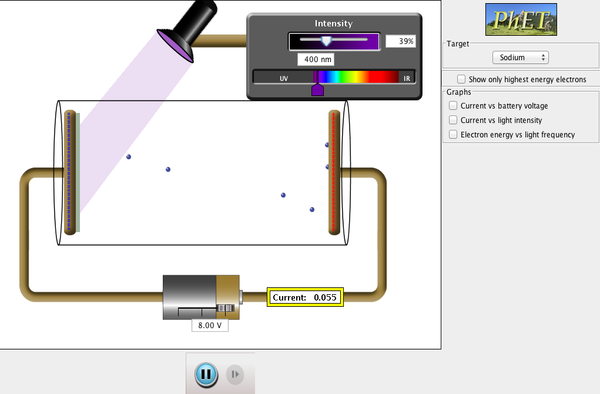
Simulating the Atom and Nucleus [undergoing transformations]
Tuesday, September 1, 2015
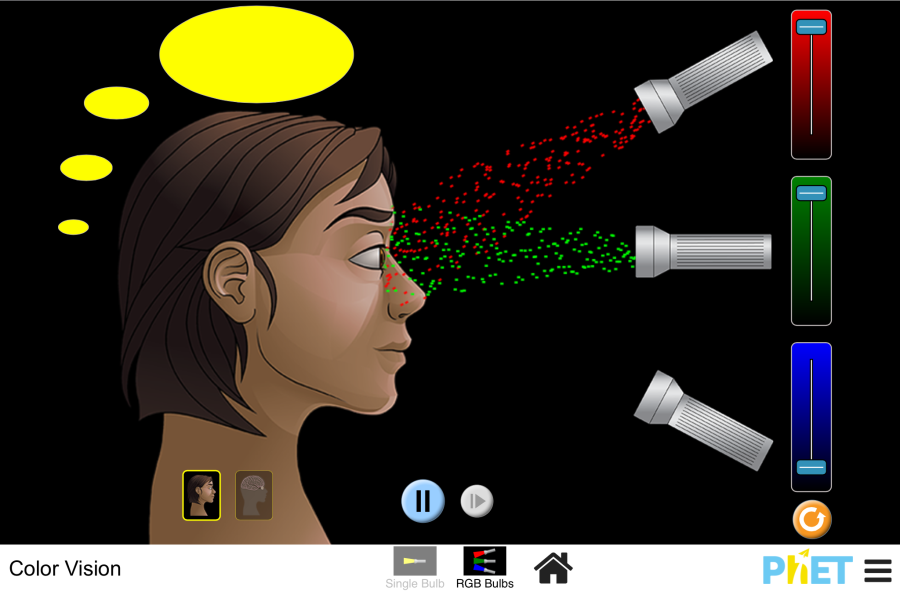
Simulating Light and Optics [undergoing transformations]
Saturday, August 1, 2015
Simulating Waves and Sound [undergoing transformations]
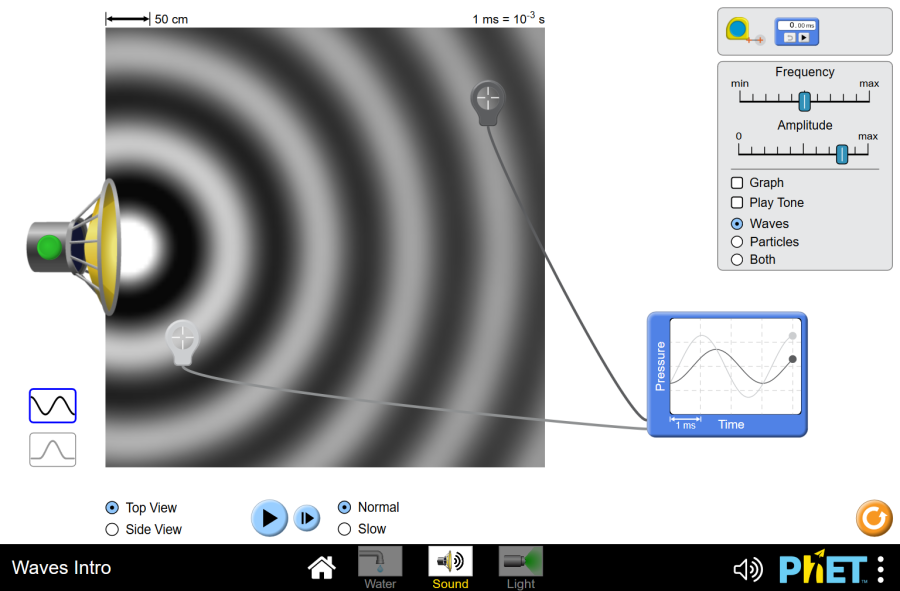
Originally developed using PhET's original Wave Interference sim, this now can now also use PhET's Waves Intro sim. I use this as a classroom activity. At certain points during the period, I will interrupt the students with discussions of what they've learned so far. This activity is included in the Conceptual Physics 12th edition lab manual at Pearson.